
The short answer
A mortgage rate lock extension keeps your locked interest rate in place for extra days when your closing runs past the lock's expiration date. Lender policies vary, and the Consumer Financial Protection Bureau (CFPB) says an extension may be expensive. The best way to avoid one is to pick a lock period that fits your real timeline and keep your file moving.
What a rate lock is
A rate lock means your interest rate will not change between the offer and closing. That holds as long as you close within the specified time frame and nothing changes in your application. The CFPB says rate locks are typically available for 30, 45 or 60 days, and sometimes longer.
Your Loan Estimate shows whether your rate is locked and for how long. Check the top of page 1. Some lenders lock your rate when they issue the Loan Estimate and some do not. If your rate was not locked when you got your Loan Estimate, federal rules require the lender to send you a revised version no later than three business days after the date the rate is locked. The revised version shows the new rate, points, lender credits and other rate-dependent charges.
What a rate lock extension is
Closings slip. An appraisal comes back late. A condition takes longer to clear. A seller needs more time. If your lock runs out before you close, your rate may no longer be protected.
An extension adds days to your existing lock. Whether it is offered, how long it can run and what it costs depend on your lender. Ask for the terms before you need them.
The CFPB's questions to ask include: "What if my closing is delayed and the rate lock expires?" Get the answer for your lender now, while you have time to plan.
What a rate lock extension costs
There is no single price. The CFPB says rate lock policies vary by lender and that a lock may be expensive to extend if your transaction needs more time. It also says your Loan Estimate will not tell you how much an extension would cost. You need to ask.
Things that may affect the cost, depending on your lender:
- How many days you need. Ask whether the price changes with the length of the extension.
- Your lender's policy. Ask whether it charges a fee, adjusts your pricing or limits how many times you can extend.
- The reason for the delay. Some lenders handle delays they caused differently from delays caused by the buyer or seller. Ask how your lender handles this.
- The market. Where rates stand on the day you ask can affect what your lender offers.
Get the extension terms in writing before you agree to them.
Extend or let it expire?
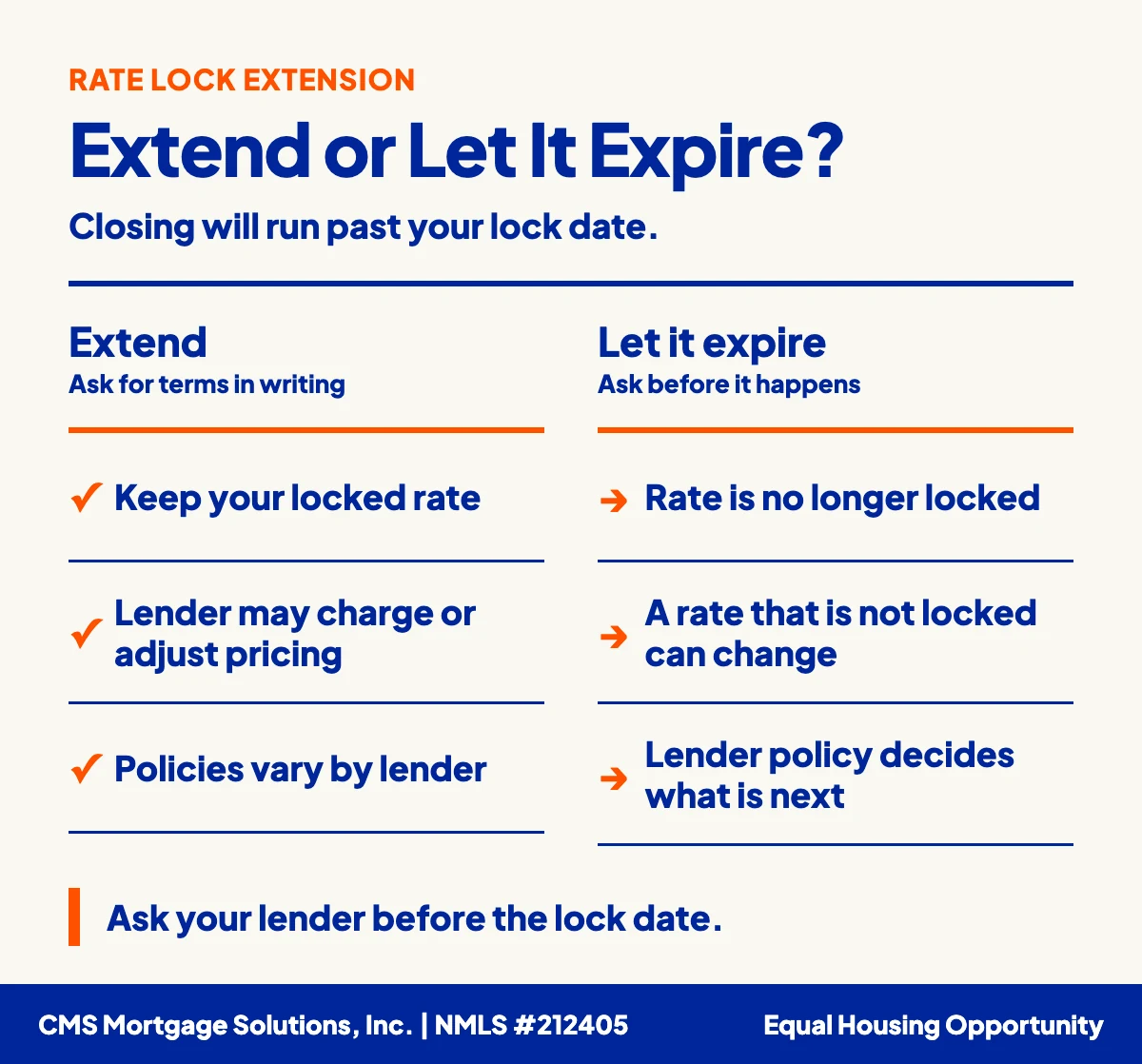
This depends on your lender's policy, where rates are and how close you are to closing. Your loan officer can lay out the options side by side.
- If rates have gone up since you locked, an extension may protect you from the higher rate. Ask what it costs.
- If rates have gone down, the CFPB notes that a lock may keep you from a lower rate. Ask your lender, "If I lock my rate and interest rates go down, what happens?" Some lenders may offer a float-down or relock option. Not all do, so ask.
- If closing is days away, a short extension may be the simplest fix.
- If closing is weeks away, ask your loan officer to compare a longer extension with other options your lender allows.
If a lock expires and you do not extend it, your rate is no longer locked, and a rate that is not locked can change. What your lender does next depends on its policy, so ask before it happens.
How to avoid needing an extension
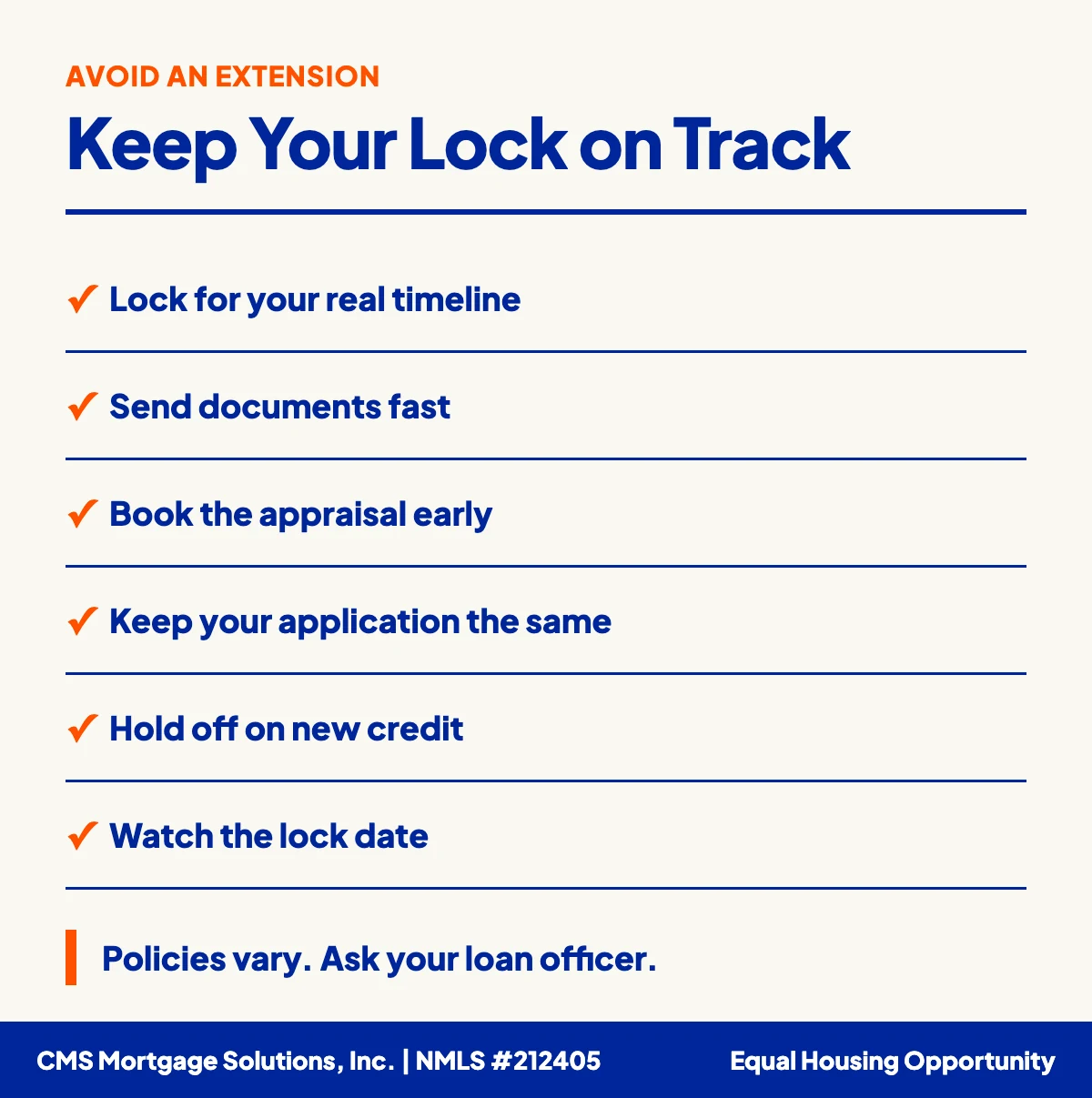
You cannot control everything. These steps lower the odds.
- Pick a lock period that fits your timeline. Ask your loan officer how long your type of loan usually takes to close and lock for that window, not the shortest one available. The CFPB says your lock should be long enough to cover the time until you close, and that you can ask your lender about switching to a longer lock period if you think yours may be too short.
- Send documents fast. Every day a document sits in your inbox uses up days on your lock. Upload pay stubs, bank statements and letters of explanation as soon as they are requested.
- Schedule the appraisal and inspection early. These are common sources of delay.
- Do not change your application. The CFPB says a locked rate can still change if your application changes. Its examples include a different loan type, a different down payment amount, an appraisal that comes in higher or lower than expected, a change in your credit score and income your lender cannot document.
- Avoid new credit. The CFPB notes that applying for or taking out a new loan can change your credit score. Hold off on new cards or financing until after closing.
- Watch the lock date. Know the exact expiration date. Ask your loan officer for a status check a week or two before it.
- Line up gift funds and title early. Money and paperwork from third parties take time. If you are using gift money, see our gift letter guide.
Questions to ask before you lock
The CFPB suggests asking your lender:
- "What does it mean if I lock my rate today?"
- "What rate lock time frame does this Loan Estimate provide?"
- "Is a shorter or longer rate lock available, and at what cost?"
- "What if my closing is delayed and the rate lock expires?"
- "If I lock my rate, are there any conditions under which my rate could still change?"
- "If I lock my rate, and interest rates go down, what happens?"
We would add one more: How much would an extension cost, and does that change if the delay is on the lender's side?
Related reading
- Today's mortgage rates
- Mortgage points explained: when to buy down your rate
- What rising rates mean for buyers
- Closing costs: what to expect
- First-time homebuyer guide
FAQ
What is a mortgage rate lock extension?
It adds time to your rate lock so you can keep your locked rate if closing is delayed past the expiration date. Availability and terms depend on your lender.
How much does a rate lock extension cost?
It depends on your lender. The CFPB says an extension may be expensive, and your Loan Estimate does not show extension costs. Ask your lender for the price in writing.
What happens if my rate lock expires?
Your rate is no longer locked, and a rate that is not locked can change. What your lender does next depends on its policy. Ask before it happens.
Can my rate change even if it is locked?
Yes, if your application changes. The CFPB lists examples such as changing your loan type or down payment, an unexpected appraisal value, a credit score change and income your lender could not document.
How long should I lock my rate?
Long enough to cover the time until closing. Ask your loan officer how long your loan type usually takes and lock for that window.
Can I extend a rate lock more than once?
Some lenders may allow it. Policies vary, so ask yours.
Sources
- CFPB, What's a lock-in or a rate lock on a mortgage?
- 12 CFR 1026.19(e)(3)(iv)(D), revised disclosures when the rate is locked (Regulation Z)
- CFPB, Understand your Loan Estimate
Talk to a CMS loan officer
A CMS loan officer can help you choose a lock period that fits your timeline and keep your file on track to close before it expires. Talk to a loan officer or find a loan officer in your state.
---
This content is for educational purposes and does not constitute financial advice. Loan terms and availability vary by borrower. Pre-approval is subject to credit, income, asset, and property verification. It is not a commitment to lend.
CMS Mortgage Solutions, Inc. | NMLS #212405 | Virginia Beach, VA. Equal Housing Opportunity. NMLS Consumer Access. This is not a commitment to lend. Programs, rates, terms and conditions are subject to change without notice.